
Visit Us @International Youth Club
When people think about Meghalaya, the first thing that often comes to mind is rain. In fact, Meghalaya is home to some of the wettest places on Earth, including the famous villages of Mawsynram and Cherrapunji. While many travelers prefer visiting during winter, those who visit Meghalaya in monsoon experience a completely different side of the state—one that is greener, fresher, and more magical than any other season.
The word Meghalaya itself means “Abode of Clouds,” and nowhere is this more evident than during the rainy season. Rolling hills disappear beneath floating clouds, waterfalls roar to life, and forests transform into vibrant green landscapes that look straight out of a movie.
According to the official Meghalaya Tourism website (https://www.meghalayatourism.in), the monsoon season is one of the best times to witness the state’s natural beauty in its full glory.
Why Visit Meghalaya During Monsoon?
Many tourists avoid rain while planning vacations, but Meghalaya is different. Rain is not a challenge here—it is part of the experience.
During the monsoon months from June to September, the state receives abundant rainfall that nourishes its rivers, forests, waterfalls, and valleys. The entire landscape becomes alive with color and movement.
Some reasons why travelers love Meghalaya in monsoon include:
- Spectacular waterfalls
- Mist-covered mountains
- Lush green landscapes
- Fewer tourist crowds
- Incredible photography opportunities
- Cooler temperatures
For nature lovers and photographers, monsoon is often considered the most rewarding season to explore Meghalaya.
Cherrapunji Becomes a Paradise During Monsoon
No discussion about Meghalaya in monsoon is complete without mentioning Cherrapunji.
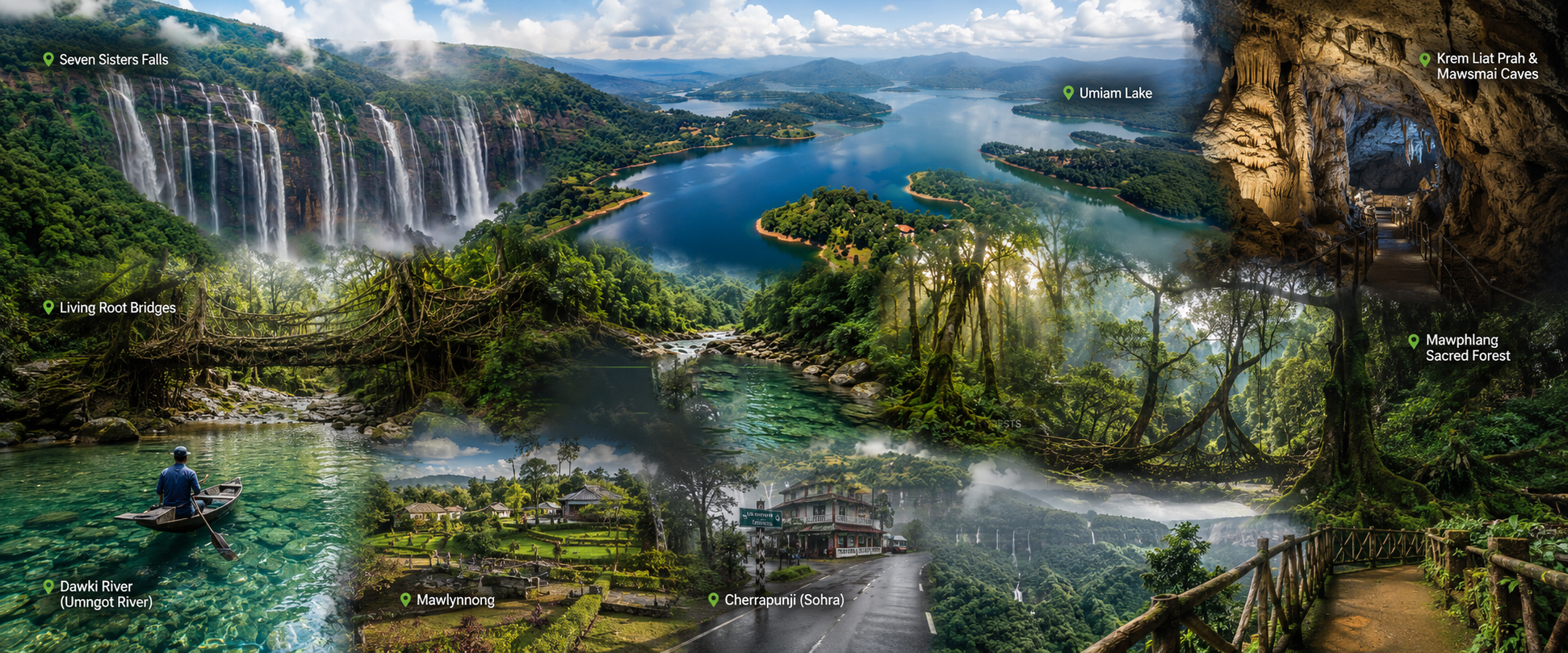
Known globally for its heavy rainfall, Cherrapunji transforms into a natural wonderland during the rainy season. Waterfalls that may appear small during winter become massive cascades flowing through cliffs and valleys.
Some of the top attractions include:
Nohkalikai Falls
One of India’s tallest waterfalls, Nohkalikai Falls becomes especially powerful during monsoon. The sight of water plunging from great heights amidst dense clouds creates an unforgettable experience.
Seven Sisters Falls
This iconic waterfall is best viewed during the rainy season when all seven streams flow at full strength.
Mawsmai Cave
The limestone caves near Cherrapunji offer a unique adventure experience and remain a popular attraction throughout the year.
Visitors can learn more about Cherrapunji and other destinations through the Incredible India tourism portal (https://www.incredibleindia.gov.in).
Mawsynram: The Wettest Place on Earth
Located about 60 kilometers from Shillong, Mawsynram holds the reputation of being one of the wettest places on Earth.
During monsoon, visitors can witness dramatic cloud formations, continuous rainfall, and breathtaking natural scenery.
Despite the rain, the region attracts travelers from around the world who want to experience one of nature’s most extraordinary climates.
Shillong During the Rainy Season
Shillong, the capital city of Meghalaya, offers a different monsoon experience.
Unlike remote villages, Shillong combines urban comforts with natural beauty. The city becomes covered in mist and greenery during the rainy season.
Popular attractions include:
- Elephant Falls
- Ward’s Lake
- Shillong Peak
- Lady Hydari Park
- Police Bazaar
The cooler temperatures make exploring the city enjoyable even during rainy days.
Living Root Bridges Look Their Best During Monsoon
The famous Living Root Bridges of Meghalaya become even more beautiful during the rainy season.
Built by the Khasi community using the roots of rubber trees, these bridges are examples of sustainable engineering and indigenous knowledge.
The trek to the Double Decker Living Root Bridge in Nongriat becomes more adventurous during monsoon as streams and waterfalls flow at their peak.
Visitors should wear proper trekking shoes and exercise caution due to slippery paths.
Best Waterfalls to Visit During Monsoon
One of the biggest reasons travelers choose Meghalaya in monsoon is the opportunity to witness its magnificent waterfalls.
Nohkalikai Falls
The tallest plunge waterfall in India.
Elephant Falls
Located near Shillong, Elephant Falls is one of the most accessible waterfalls in the state.
Wei Sawdong Falls
Known for its stunning turquoise pools and multi-level cascades.
Seven Sisters Falls
A seasonal attraction that reaches peak beauty during the rainy months.
These waterfalls are among the most photographed locations in Northeast India.
Travel Tips for Visiting Meghalaya in Monsoon
Traveling during monsoon requires some preparation.
Carry Rain Protection
Always keep:
- Waterproof jacket
- Umbrella
- Waterproof backpack cover
Wear Proper Footwear
Trekking trails can become slippery, especially around waterfalls and root bridges.
Check Weather Forecasts
Heavy rainfall may occasionally affect road conditions.
Plan Extra Travel Time
Monsoon weather can slow down transportation in certain areas.
Protect Electronics
Waterproof cases are highly recommended for cameras and mobile devices.
Is Meghalaya Safe During Monsoon?
Yes, Meghalaya is generally considered safe for travelers during the rainy season.
However, visitors should:
- Follow local travel advisories
- Avoid risky trekking routes during heavy rainfall
- Stay updated on weather conditions
- Book accommodations in advance
Most major tourist destinations remain accessible throughout the season.
Conclusion
For travelers seeking dramatic landscapes, roaring waterfalls, misty mountains, and unforgettable natural beauty, Meghalaya in monsoon offers an experience unlike any other destination in India.
While winter attracts the largest number of tourists, the rainy season reveals the true character of Meghalaya. From the majestic waterfalls of Cherrapunji to the cloud-covered hills of Shillong and the lush forests surrounding the Living Root Bridges, every corner of the state becomes more vibrant and beautiful.
If you want to experience Meghalaya at its most natural and breathtaking, the monsoon season may be the perfect time to visit.